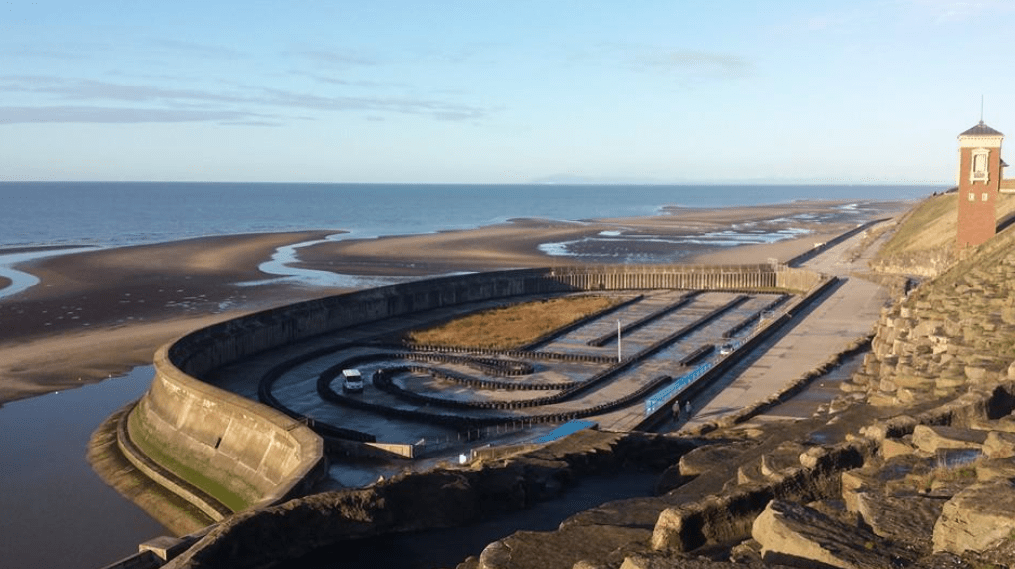
I was looking for dolphins off Gynn Square last week unsuccessfully, though several seals were keeping me entertained. I scanned north to see if there were any waders on the edge of the go kart track. A pipit popped up next to the Oystercatcher I was watching, and even though I was distant viewing through a scope it looked like a Rock Pipit. This was odd, as the few Rock Pipits that turn up here are flighty winter visitors.
I had time to be patient, and wandered up to the Cabin Lift and mooched about. I kept getting brief views of a couple of birds, and calls that sounded promising. Eventually one of them gave itself up, and I got some record shots through the scope.
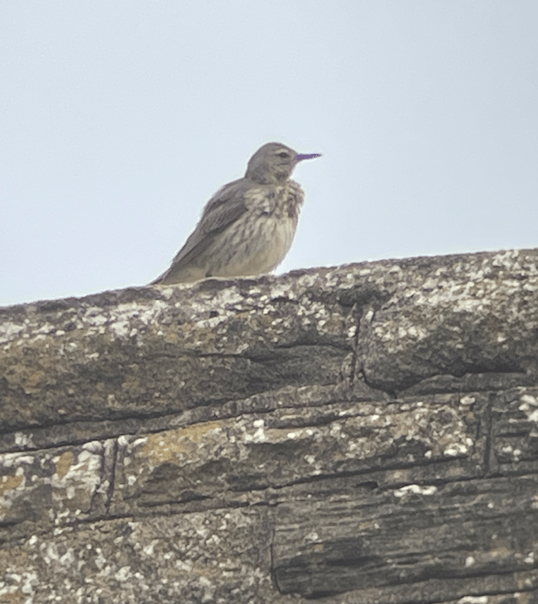
The presence of a couple of birds in the middle of June could really only mean that they were breeding or attempting to breed. This was remarkable as Rock Pipits have never been known to nest on the Fylde coast before. That said, it could perhaps have been foreseen as they’ve gradually spread down the Cumbrian coast and then colonised the sea wall at Heysham to the north.
Rock Pipits are interesting if understated about it. The British birds don’t generally move very far, though they are clearly expanding range at the moment for unknown reasons. Scandinavian birds on the other hand regularly migrate hundreds of miles to the British Isles, and are probably the majority of those wintering on Fylde salt marshes. These birds look quite distinctive in spring and summer, and in time may come to be treated as a separate species.
I went back again this morning to confirm whether the birds were lingering. I only had my phone, but got the record shot below. There were at least two birds present, which appeared to be engaging in a territorial dispute at one point so maybe there are more than two birds.
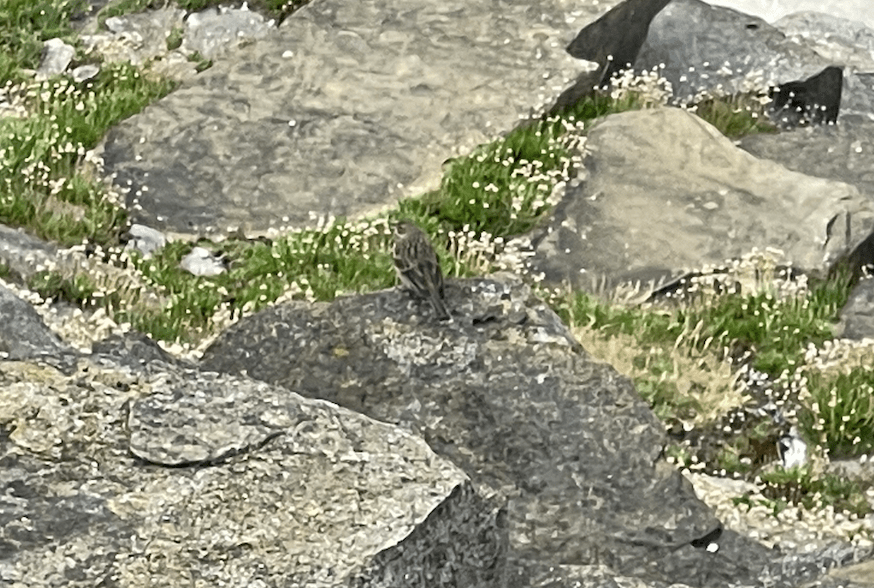
With apologies for the quality
It seems pretty clear that Rock Pipits are breeding or attempting to breed in Blackpool in 2023. With all the bad news about the natural world at the moment it’s refreshing to see a good news story that on the face of it doesn’t have a climate change twist in the tale. For some unknown reason Rock Pipits are apparently thriving in the north west at the moment.
 Natural Selection
Leave a comment