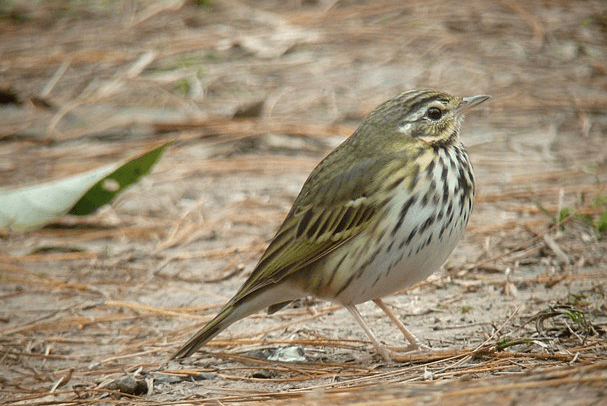
Olive-backed Pipit by Len Worthington, used under Wikipedia Creative Commons Licence
A proper birding post on Natural Selection for a change, regarding an Olive-backed Pipit I found on Out Skerries in October 2022. So why am I going back to this now you may ask. The answer is an article in this month’s Birdwatch magazine.
Stanislas Wroza has produced a new book coming out soon Identifying Migratory Birds by Sound in Britain and Europe. This tome when available will provide sonograms and links to sound clips to assist in identifying the calls of 450 species occurring in the region.
The taster article in Birdwatch majors on using calls recordings to separate the Tree Pipit (which is widespread in the region in summer) from the Olive-backed Pipit (which is a rare visitor). The table below compares the two and a Redwing.
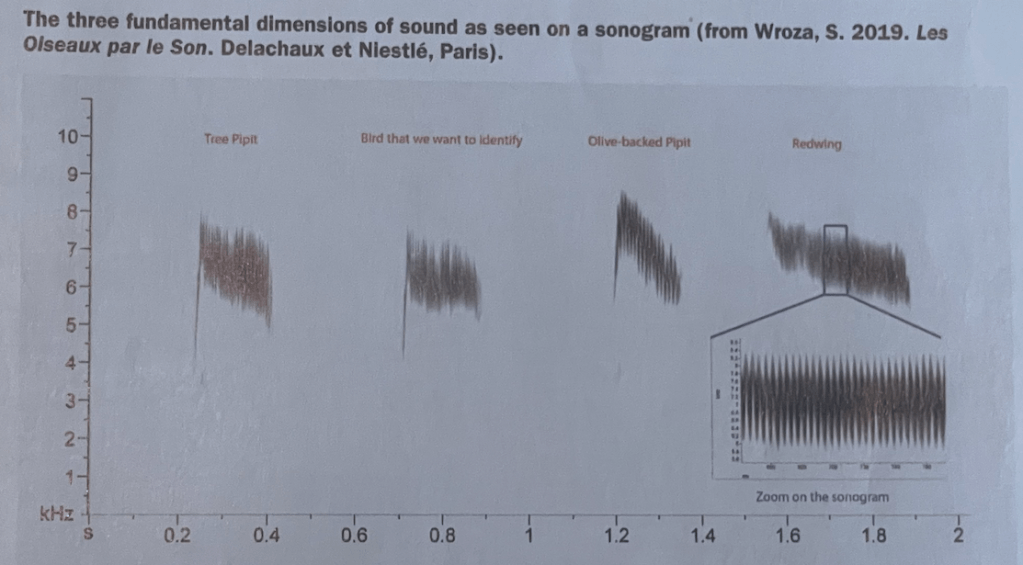
So essentially a good recording of a Tree or Olive-backed Pipit that hasn’t been identified visually will confirm the identification through the frequency and the pattern of the ‘tail’ of the sonogram of the call. In the above diagram the first two are Tree Pipits and the third is an OBP, the difference is clear.
On 24th October 2022 on a quiet day of Skerries birding I was walking along the North Hill on Housay when I accidentally flushed a pipit. It flew strongly across the West Voe. I didn’t think I would see it again, and recorded it on eBird as Tree / Olive-backed Pipit, but it definitely sounded interesting.
The following morning was a bright crisp day and as I approached the Old Schoolhouse, more or less where the bird had headed for, presumably the same individual popped up on a drystone wall. A brief view through binoculars showed to me a classic OBP. My camera had been terminally damaged earlier in the trip. Crucially I therefore used my phone to get some video footage of it flying off.
I did a written description for the Shetland Records Panel and offered to get a sonogram from someone as I didn’t know how to do that. I didn’t think a lot more about it until the Shetland Bird Report came out this year and the record was adjudged not proven.
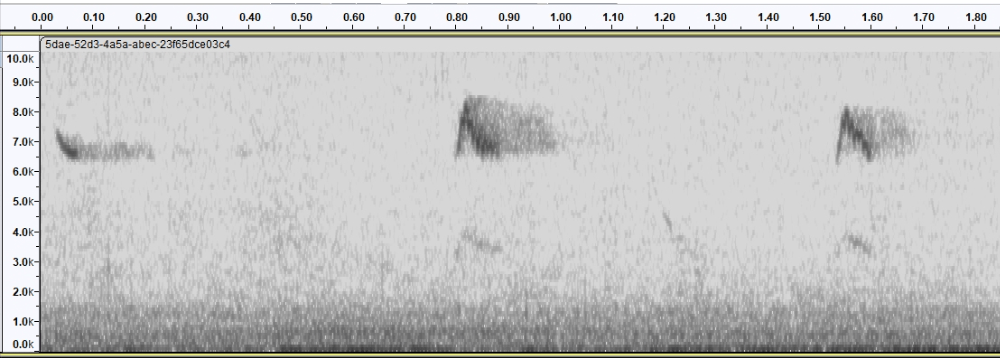
Having learned a bit more about getting sonograms I produce the one below:
Chris Batty commented as follows:
“Both calls have their equivalents in Tree Pipit, where both are lower-pitched, somewhat below Goldcrest-pitch. The ‘bzzzz’ only exceptionally reaches 8 kHz in Tree and the Tree’s sit-equivalent rarely rises above 6 kHZ. This latter call in particular is very useful for separating OBP from Tree. This bird is 100% an OBP.”
I’ve provided the sonogram and the record is being reconsidered. As the new book suggests the value of sound recordings in such situations can be great. If you’re interested you can hear the recording at https://ebird.org/checklist/S121304735?_gl=1*igopm2*_gcl_au*MTk3OTQxMzA1My4xNzIxMDc3ODIz*_ga*Nzc0MjY2NjczLjE3MjEwNzc4MjM.*_ga_QR4NVXZ8BM*MTcyMjcxMjI5My4yOS4xLjE3MjI3MTM3MzkuMzIuMC4w&_ga=2.43878053.1604509507.1722547129-774266673.1721077823
 Natural Selection
Leave a comment