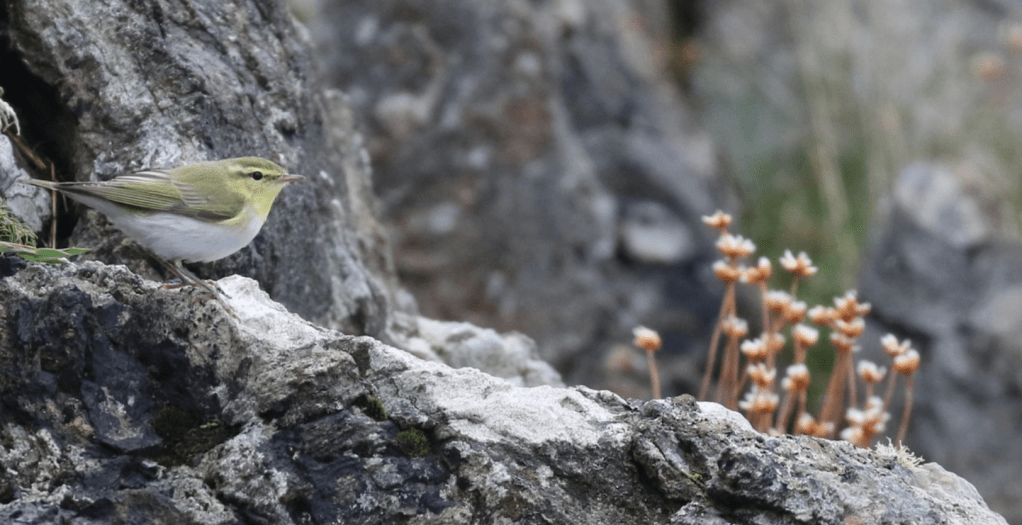
Wood Warbler, September 2024 by Dave Bywater
Highlights
I’ve done this for a few years now and normally it begins with a list of several species recorded on Skerries a handful of times over the years. Prepare to be rather underwhelmed by this year’s version, unless one of the island residents sends me a picture of a Pine Grosbeak in December:
Slavonian Grebe – third record
Little Egret – third record
Tufted Duck – third or fourth documented record.
Nightjar – fourth record
And that’s basically it. Slavonian Grebe is presumably under-recorded, particularly in winter. Little Egrets are increasing in Shetland with two or three around this autumn. There is only a small pond on Skerries so Tuftie is a genuine isles mega. Nightjars have become a lot more regular in Shetland the last few years, with a dozen this year including Fair Isle which is probably a record total.
An honourable mention goes to the Corn Bunting in May which was the fifth record in the sixty years of modern recording, and the first since 1975. Corn Buntings used to breed on even small islets of Shetland, but of course don’t anymore. If you missed this bird on the news services at the time it was initially reported as a Rustic Bunting and was reidentified from photographs.
A monochrome Yellow Wagtail found by Dave Bywater in the autumn looked the part for an Eastern, but the call was less promising.
Coverage
During the excellent run of easterlies in the spring a number of Shetland resident birders put a lot of effort in on Skerries, particularly Chris Roger who stayed in a motorhome. Mike and Kathy Young-Powell visited very late in the spring.
Several Shetland resident birders made weekend day visits during the autumn. Dave Bywater was on for the second half of September and I visited the last week of October.
Overall it’s probably fair to say spring coverage was higher than average spurred by things turning up, and autumn coverage was in line with the recent average. I would need to check the last time there was no BRRC rarity recorded in a year on Skerries.
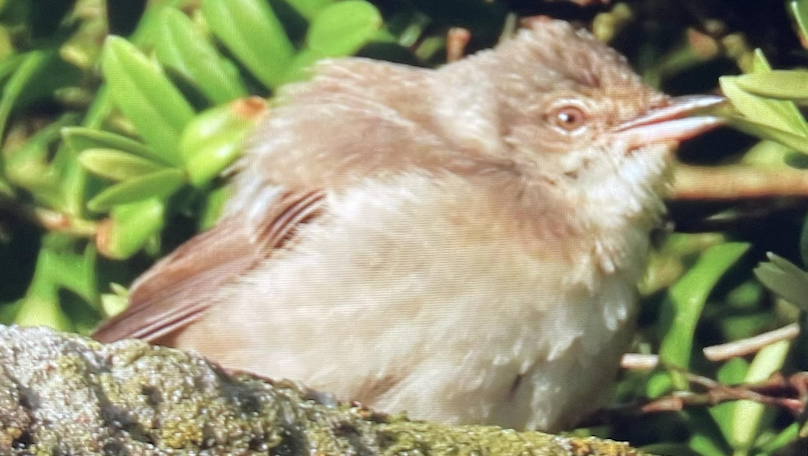
Barred Warbler, October, by the author
Seasonal summaries
Highlights of the good spring for passerine migrants in terms of daily maxima included 7 Red-backed Shrikes, 7 Wrynecks, 7 Ring Ousels, 5 Icterine Warblers, 2 Marsh Warbler, Bluethroat, Rosefinch, Turtle Dove, Wood Warbler, Blue-headed Wagtail and Yellowhammer as well as commoner species. This is an indication of relative abundance not total numbers of individuals.
During the summer Swift were seen in June (two together) and August.
Autumn was poor by comparison. The peak Yellow-browed Warbler count was 14 birds. Up to three Red-breasted Flycatchers were present together, two Common Rosefinch and single Bluethroat, Red-backed Shrike and Barred Warbler.
Snow Buntings included 20 birds in late October.
 Natural Selection
Leave a comment