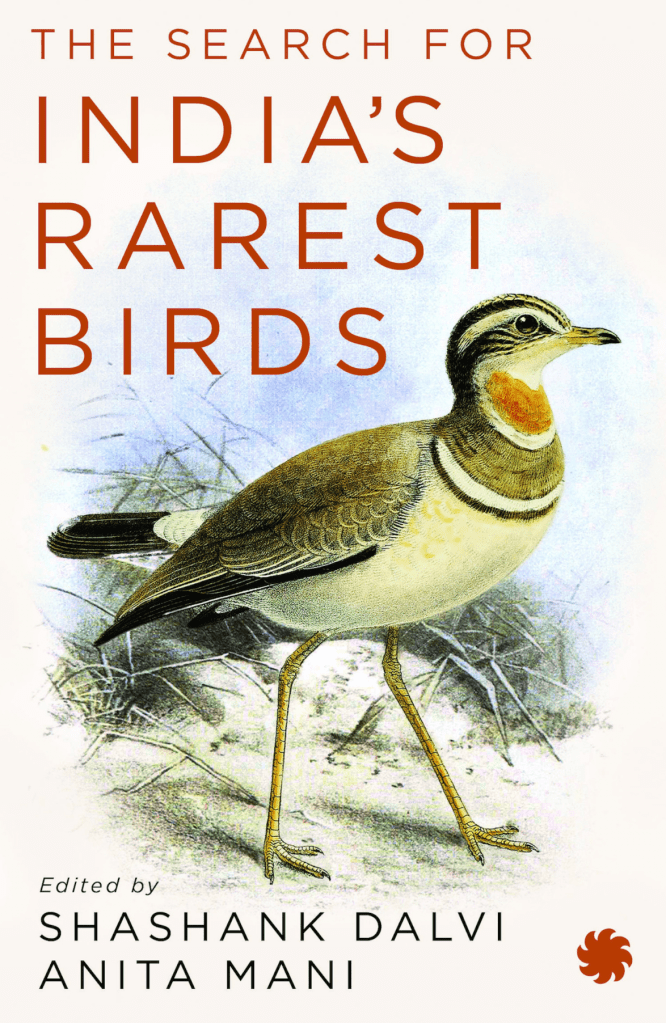
I’ve written on this blog about the current shortage of good quality writing about UK birding and birders. In recent years I’ve broadened my search to other countries, starting with ‘Big Year’ accounts from the USA. I had read ‘The Living Air’ about Indian birding by Aasheesh Pittie, and through following his Facebook updates saw this book came out last week.
The work is a collection of a dozen essays about rare birds. ‘Rare’ in this context is somewhat fluid. The opening account by Aasheesh on the Pink-headed Duck covers a species generally regarded as extinct. It’s followed by a piece by Bharat Bhushan on searching for the critically endangered Jerdon’s Courser.
Other sections of the book include discovering or rediscovering birds in India that were strongly suspected to be overlooked. These include interesting cases like the Forest Owlet which was ‘hiding in plain sight’ at several sites in India for many years despite being active during the day. Other accounts on the Banasura Laughingthrush and Masked Finfoot involve treks to remote areas but also cautionary tales about habitat damage.
I enjoyed Radhika Raj’s account about the Nicobar Megapode. It’s engagingly written but the subject matter is also fascinating in its own right. A species greatly threatened by habitat loss in the 2004 Indian Ocean tsunami it has a unique approach to nesting. The eggs are buried in a giant mound of compost and sand, which keeps them at the required temperature with the birds removing some of the mound if there is risk of overheating.
Several of the first few chapters are a bit similar in content, involving tracking down some hard to find species and also finding out that they had already been found or refound by others. This is broken up with an entertaining piece on twitching within India by Atul Jain, it’s always good to read about this outside of the UK where it is most popular. This and James Eaton’s account of finding Long-billed Bush Warbler give some insight into the mind of the obsessive seeker of ‘rare’ birds however defined.
The initial sentence of the introduction says ‘the biggest high for a birder is coming upon a species hitherto unknown to science’. I don’t agree with that, I can’t remember if it was Kenn Kaufmann who said you’re a good birder if you enjoy it but I agree with the sentiment and not everyone needs to see the rarest of the rare. But this book gives a great insight into birders who do get their highs this way, what makes them tick and some of the astonishing exploits they get up to as a result.
The search for India’s Rarest Birds is currently available to UK readers for £4.80 as an ebook on Amazon. Personally I think it’s well worth the price of a pint.
 Natural Selection
Leave a comment