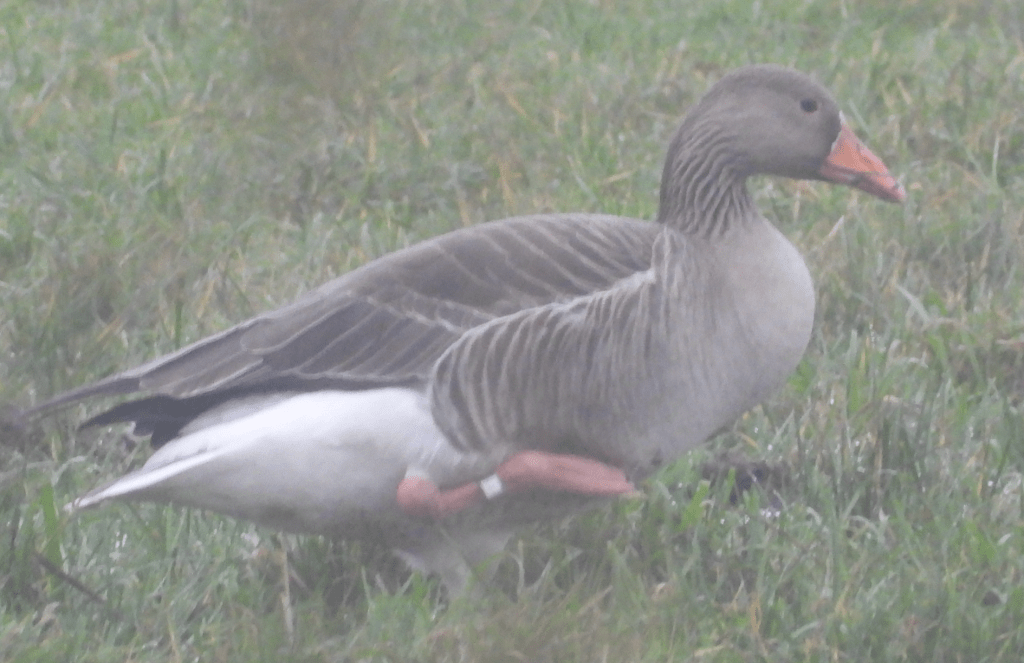
The situation with Greylag Geese in northern Britain is complicated, and I’m probably a bit out of touch with recent changes as well. There used to be wild populations that visited in winter from Iceland, apparently to as far south as Morecambe Bay. With the feral / naturalised population it’s increasingly unclear whether they still do, and whilst in one sense a Greylag is a Greylag is a Greylag it’s something that has continued to interest me.
In winter we also have flocks of wild Pinkfeet locally, sometimes several thousand strong. Careful scrutiny of these flocks can turn up stragglers of other species including both Bean Goose species and bother European races of Greater White-fronted Goose. These flocks contain single Greylags on occasion, and there is a school of thought that these are wild Icelandic birds that have migrated with the Pinkfeet rather than their own species.
Simply put a Potential Icelandic Greylag (yes the torturous blog title pun is finally explained) has no identifying features. To all intents and purposes a feral Greylag nesting in Blackpool looks no different to a Greylag that would have flown here all the way from the Land of Fire. There are exceptions, some feral Greylags have white feathering indicative of domestic ancestry, but generally they all look the same.
So realistically the only way to make any headway on this is to get a leg ringed or neck collared Greylag in a flock of Pinkfeet. The only time I’ve been aware of this locally is when Stuart Darbyshire saw the bird below last autumn on the Ribble marshes.

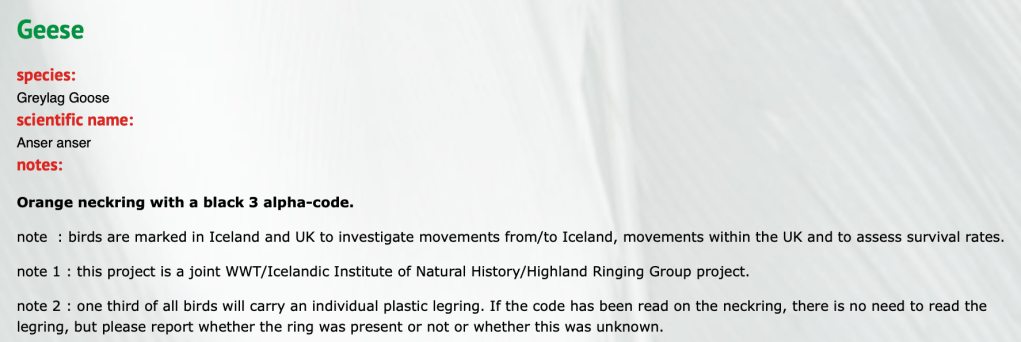
Unfortunately the code on this bird’s neck collar was never read. It would still more or less resolve the mystery if orange collars were indicative of one population or the other, but they’re not. As can be seen below both Icelandic and northern English feral populations have had orange neck collars put on birds at some point (as well as birds in Ireland and northern Scotland).
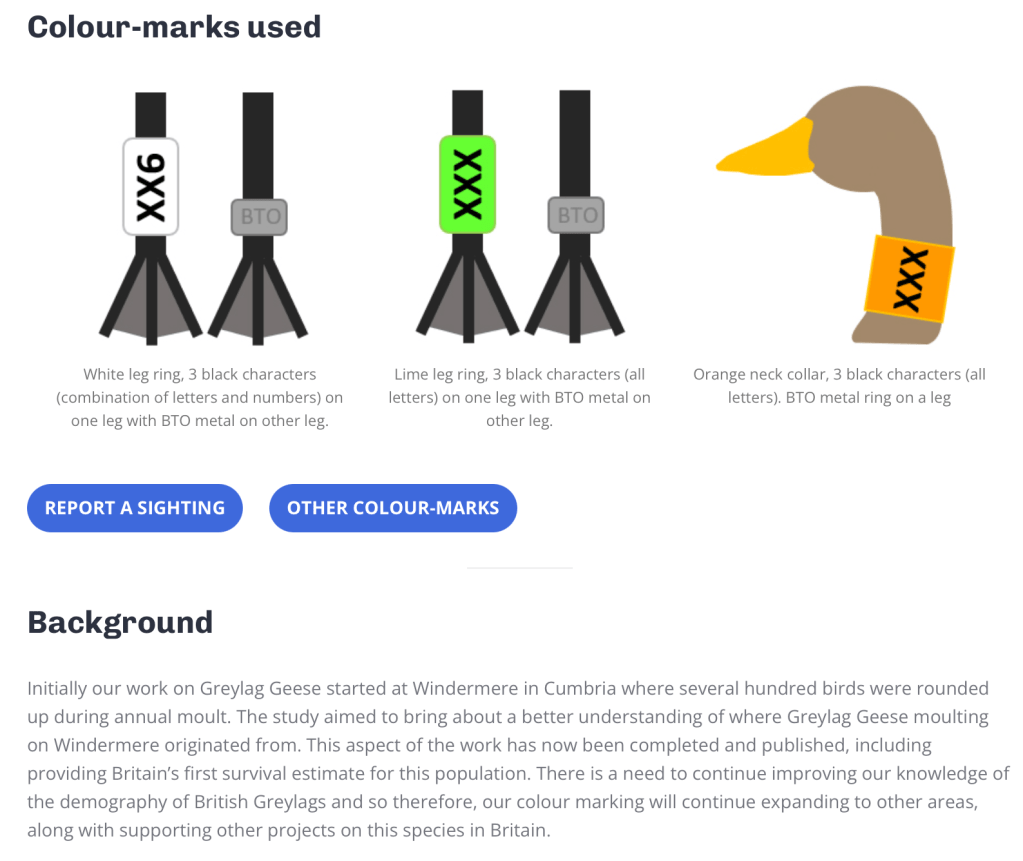
Today I saw a small flock of Pinkfeet near Poulton-le-Fylde and parked up in the industrial estate to have a look through them. A Greylag with a pronounced limp was among them. As I watched this bird it was clear that it had a metal ring on the injured leg. It is possible that the ring has caused the injury, but it’s also possibly a coincidence. Either way it was too far away for the engraved numbers and letters to be decoded.

A couple of weeks ago the same flock held an unringed lone Greylag, which was very petite. It turns out presumably this individual was at the opposite end of the flock today in the mist at the far side of the field.

So in summary the mystery of the origin of these birds locally continues. It’s always good to solve these things, but it’s also good to have something to continue exploring.
Update – Kane Brides contacted me having read this to say that Icelandic birds were recorded in Morecambe Bay in 2002, but also that 500 feral birds were given metal rings only on Windermere this summer. I was fence sitting a bit but given this I lean towards the bird above and the one Stuart had in September being feral Greylags in Pinkfoot flocks.
 Natural Selection
Leave a comment