
Jane wanted some air and a walk this evening so we decided to go to Stanley Park, which are very fortunate to live quite close to given it’s a majestic open space. When we arrived I went to get my binoculars from the car, they were still in the house. I thought my plans to read a couple of gull rings had run aground.
A couple of people were feeding the gulls so some of the Black-headeds were coming quite close. As a result I was able to read 274E, which was ringed three and a bit years ago in the park. It hasn’t been seen anywhere else, it’s also back quite early so maybe it never goes very far.
I was defaulting to a chilled walk when I noticed one of the 80 or so Canada Geese was metal ringed. I’ve made a false economy with my latest phone upgrade and the camera is pants. Fortunately Jane has a decent camera on hers and with persistence and only mild consternation on the goose’s part was able to confirm the sequence.
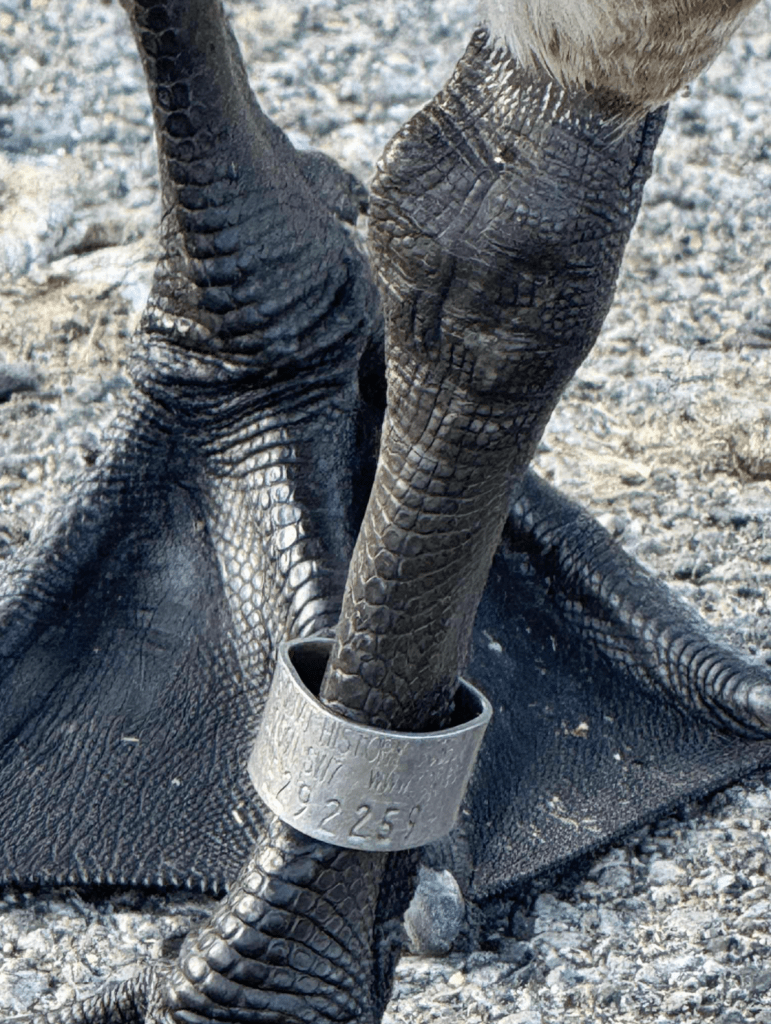
As you can see it was (completely unsurprisingly) a British ring. I once had a bird from the Midlands at Fairhaven Lake, and I’ve seen Cheshire ringed birds locally on their way back from Windermere moult sojourns. But the betting was on this bird being ringed on the moulting grounds.
I checked with Kane Brides, who with his customary efficiency got back to me within the hour to say it was one of his. He had ringed it as an adult male at Millerground, Windermere last June. Without a Darvic it probably won’t get recorded that often but I’ve submitted it to the BTO.
With a decent phone or a crap pair of binoculars you can get involved in this sort of Citizens Science. If you see the park Darvic ringed gulls and report them via https://waterbirdcolourmarking.org you can get instant life histories. If you’re luckier than I was today it may have been to Scandinavia for its summer holidays. Try it, it can get quite addictive.
 Natural Selection
Leave a comment