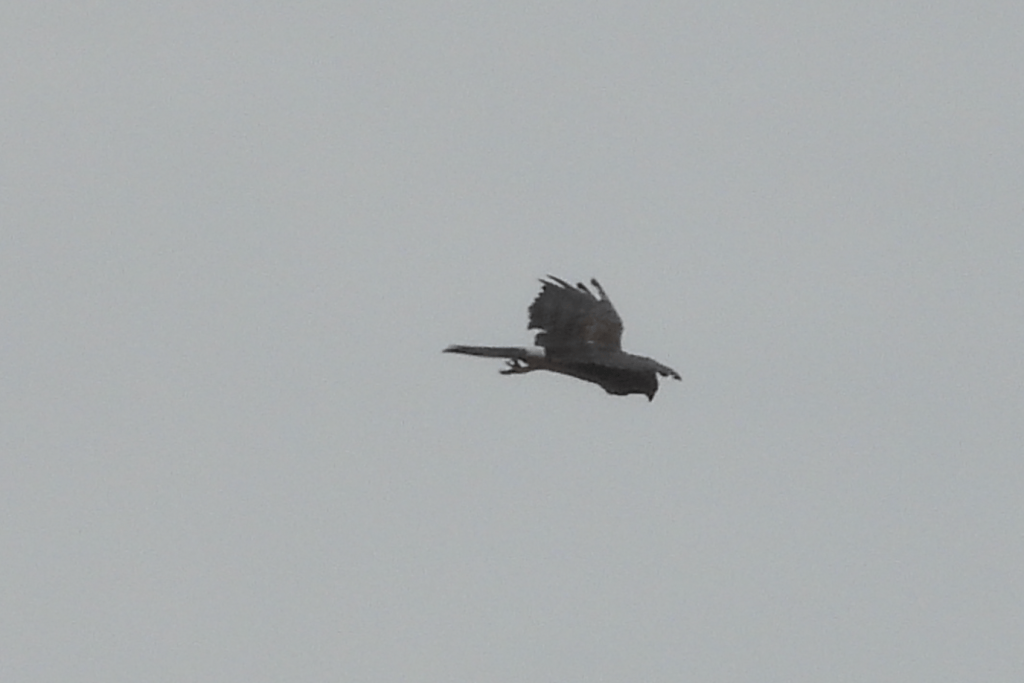
Hen Harrier or Northern Harrier, Boa Vista 22 October. Note in particular the white rump eliminating Marsh Harrier and the larger and broader-winged structure than Montagu’s (or Pallid) Harrier
In the last post on my Boa Vista holiday I included the above picture (zoomed in a bit more) and invited feedback on the fact that it showed features of a Hen Harrier. This follow-up documents the record following subsequent consultation with experts.
On 22nd October there was a marked easterly airflow off the African coast towards Cape Verde. In the morning I had been to the wader habitat at Lacacao and been astonished to see two Blue-cheeked Bee-eaters drop in (see other blog post).
In the afternoon I tried to find a pool covered by visiting birders a few weeks before south of the Lacacao road. I did find it eventually, but when I got out of the car at the roadside the first thing I saw was a large raptor circling. It certainly wasn’t an Osprey, and it didn’t look like the only other regular large raptor on Boa Vista (Black Kite).
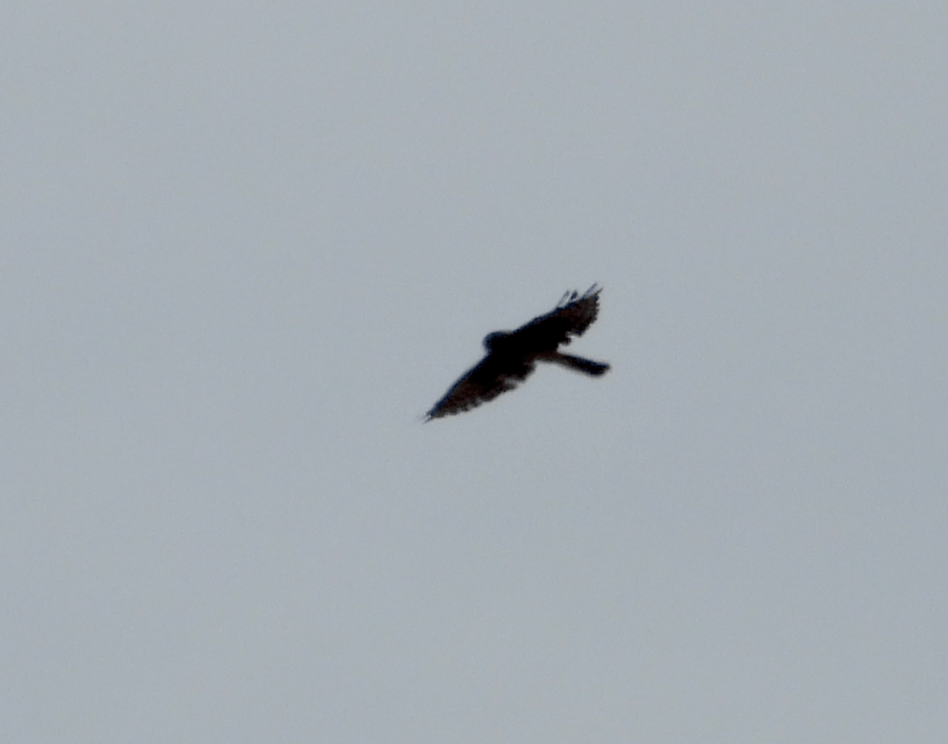
Of four pictures I managed before the bird drifted west the best is at the top of the page. The one immediately above was the next best. This suggested in addition to the better image that the bird was a female Hen Harrier or Northern Harrier (the North American equivalent) in wing moult.
I initially asked Chris Batty for thoughts via WhatsApp. His response was also that it looked to be a female Hen Harrier or Northern Harrier. Encouraged by this I contacted Dick Forsman, an authority on raptors. He also agreed that the bird was a moulting adult female Hen Harrier or Northern Harrier. He also said that having lightened the images and looked closely it wasn’t possible to say which of the two species, but I hadn’t really ever thought it would be from relatively distant and grainy images.
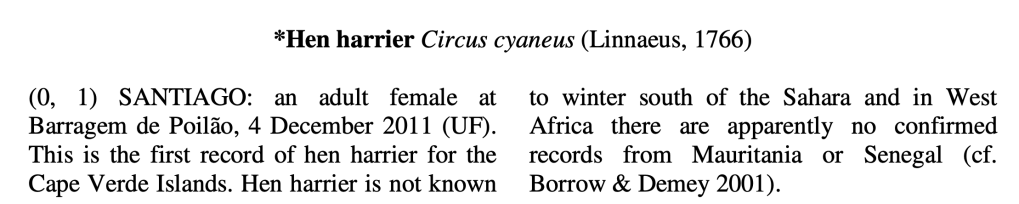
The only previous record of Hen Harrier or Northern Harrier is included in Cornelis Hazevoet’s Cape Verde rare bird report in 2012 as follows. At the time Hen Harrier and Northern Harrier were regarded as the same species, only being split in 2016 and 2017 respectively by different taxonomic authorities.
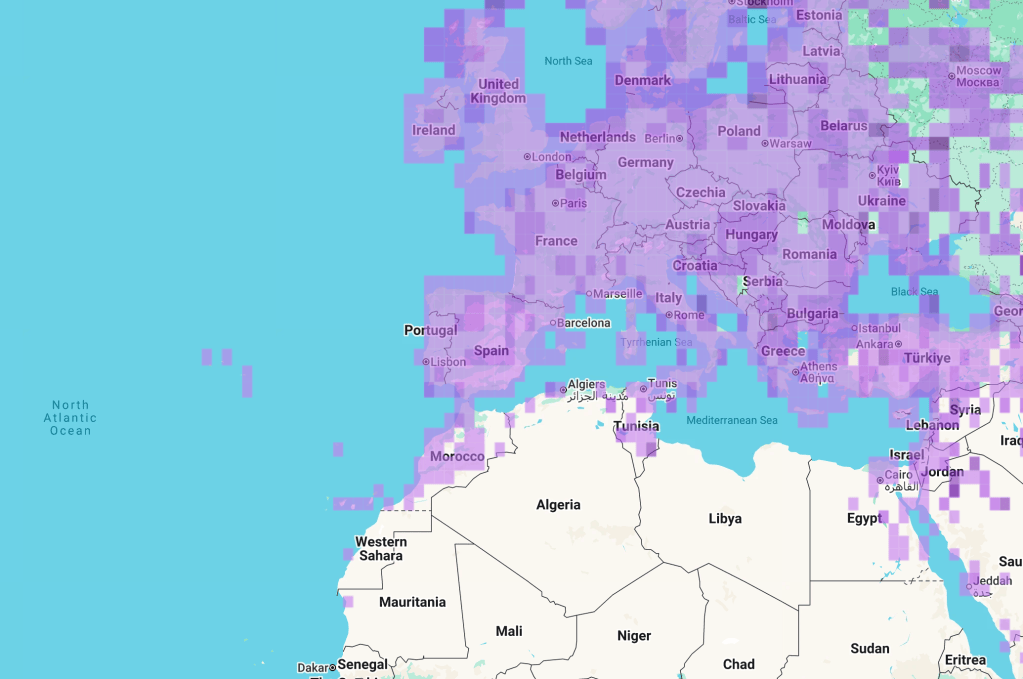
To underline what was said in 2012 here is the eBird record distribution as at November 2026, which does include a Mauritania record but still none from Senegal. Cape Verde are the white dots to the left of ‘Dakar’ on this map.
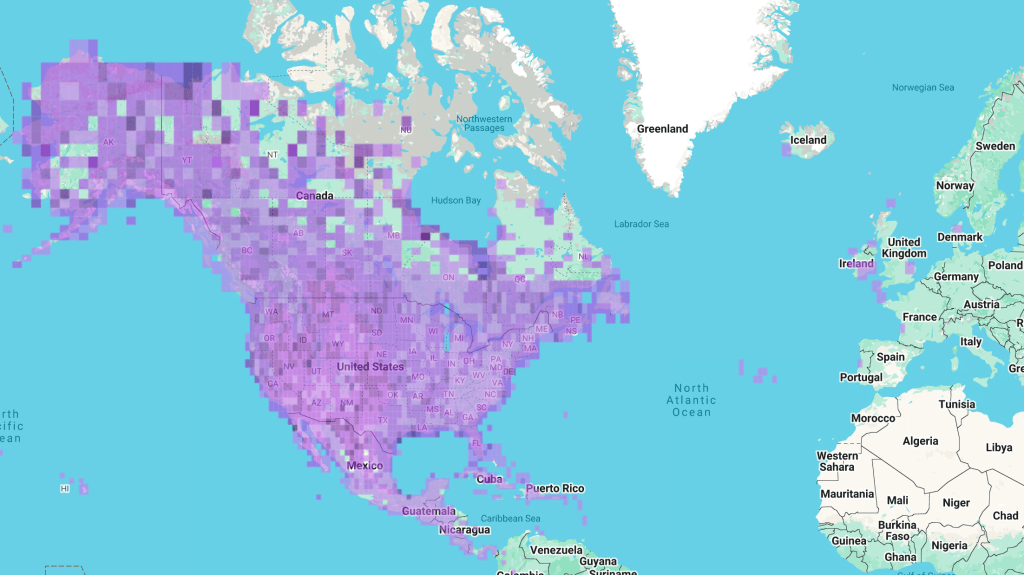
And here’s the Northern Harrier distribution map. Cape Verde is at a similar latitude to the southern wintering area, but there are no vagrants south of The Azores.
As well as the Blue-cheeked Bee-eaters other birds from the east were turning up on Boa Vista at the time. This included House Martins and Sand Martins, Wheatear and non-passerines including Pintail ducks and flocks of Spoonbills. There is no way of knowing either way for sure, but I suspect in that context a bird coming from the east and continuing east is more likely to be a wandering Hen Harrier than a Northern Harrier.


Leave a Reply